Equipment rental is one of the major cost items on a construction site: in earthworks and erection it can account for a noticeable share of the estimate. Proper planning makes it possible to cut these costs by tens of percent without losing pace — through accurate selection of machines, a well-thought-out schedule and an understanding of what exactly you are paying for.
What makes up the price
| Component | How it is calculated | What to look out for |
|---|---|---|
| Rate | Per engine hour or per shift (usually 8 hours) | Whether time is counted from leaving the base or from arrival on site |
| Minimum order | Often 4–8 hours, even if the job took one hour | Whether several tasks can be combined into one order |
| Mobilisation | Delivery to the site and back; for heavy machinery — a low-bed trailer | Fixed amount or by mileage |
| Operator | Usually included in the price | Who is responsible for slingers, signallers and permits |
| Downtime | If caused by the client, usually paid at the rate | How the start and end of downtime are recorded |
| Fuel | More often included; for long-term rental — separately | Consumption rate and refuelling procedure |
Good to know Compare not the hourly rate but the total cost of completing the task: rate × actual time + mobilisation + possible downtime. A cheap machine that works twice as long ends up costing more.
How to match machinery to the task
Excess capacity costs more, while insufficient capacity disrupts deadlines. Below are guidelines for the main types of work; for current models and specifications, see the special machinery catalogue.
| Task | Suitable machinery | Comment |
|---|---|---|
| Excavation for a private house, trenches | Backhoe loader | Versatile, quickly relocates under its own power |
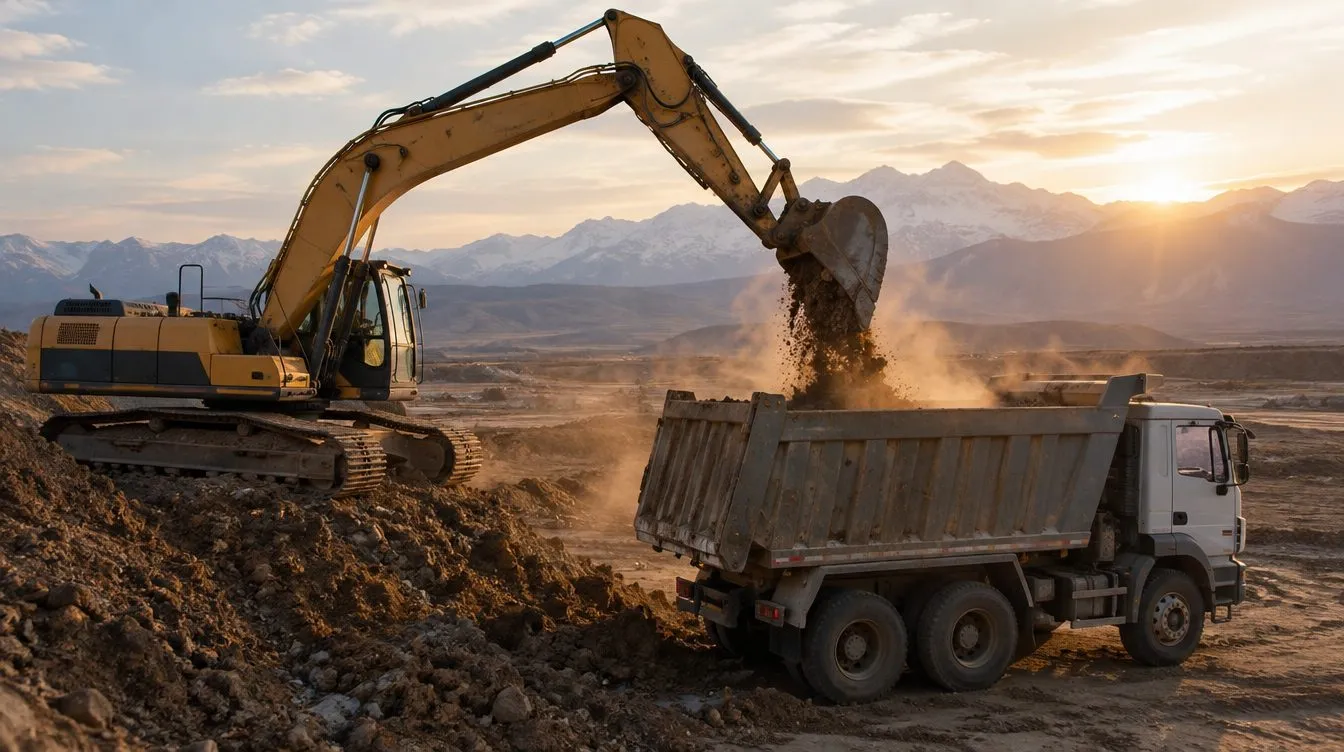
| Large excavation, rocky soil | 22 t crawler excavator | High productivity, requires delivery by low-bed trailer |
| Soil removal | 25 t dump trucks | The number of trucks is calculated from the excavator cycle |
| Grading, backfilling, compaction | Bulldozer, motor grader, soil roller, plate compactor | Roller and plate compactor — based on layer thickness and volume |
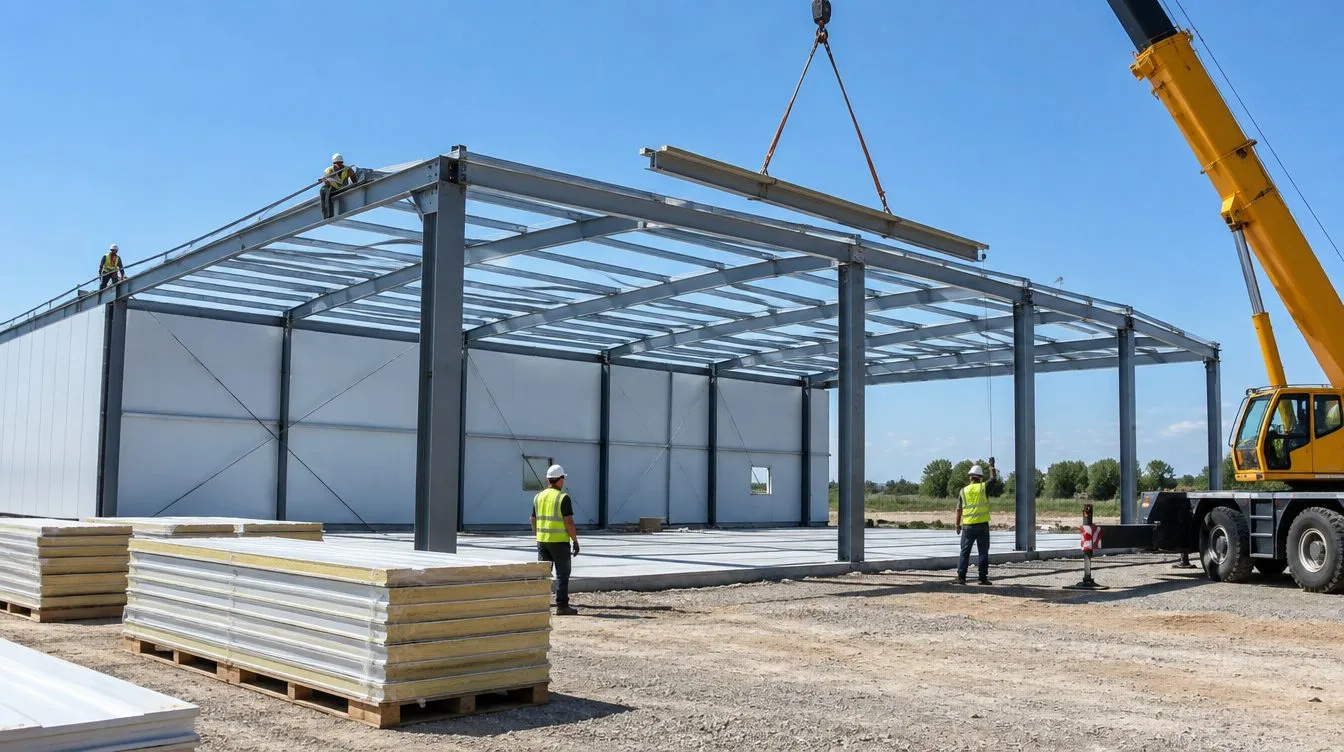
| Installation of slabs, trusses, steel structures | 25 t or 50 t truck crane, crane-manipulator truck | Lifting capacity is selected by boom reach, not by load weight |
| Concreting | Truck mixer, 36 m truck-mounted concrete pump | A pump pays off on large volumes and at height |
| Work at height, facades | 28 m aerial platform | Cheaper than scaffolding for short tasks |
| Site power supply | 100 kW diesel generator | Power — based on the sum of the equipment's starting currents |
Warning The most common mistake when ordering a crane is choosing it by load weight. A 25 t truck crane lifts 25 t only at minimum reach. At a reach of 15–20 m its actual lifting capacity can be several times lower, so a crane is selected by its load chart and the site layout.
How to save: a step-by-step plan
- Prepare the work front The site is cleared, access roads are filled, materials and slings are in place, utilities are marked. Any waiting on site is paid downtime.
- Combine tasks One truck crane visit for several lifts, one excavator visit for the excavation and utility trenches.
- Choose machinery to fit the task Excess lifting capacity or bucket volume costs more and does not always speed up the work.
- Coordinate logistics Balance the number of dump trucks against the excavator's productivity so that no machine stands idle.
- Negotiate a long-term rate For work lasting a week or more, a per-shift or monthly rate is more cost-effective.
- Record the time Keep a waybill or a shift log signed by the responsible person — this prevents disputes at settlement.
Checklist before ordering
- the type and scope of work are described: cubic metres of soil, weight and dimensions of loads, lifting height;
- site dimensions, access restrictions, the presence of power lines and neighbouring buildings are known;
- dates and shift durations are set;
- it is clear who provides slingers and the person responsible for the safe performance of work;
- the contract states the rate, mobilisation, conditions for downtime and order cancellation;
- the procedure for confirming hours worked has been agreed.
Tip If the site needs different machinery — an excavator, dump trucks, a roller, a crane — it is more cost-effective to order it from a single supplier. This makes it easier to synchronise the schedule, and mobilisation can be optimised.
One-off order or long-term rental
The rental format depends on the duration and rhythm of the work. For short tasks — unloading materials, installing a few slabs, digging a trench — an hourly order with a minimum charge is enough. If the machinery is needed every day for several weeks, the hourly rate becomes unprofitable: it is better to agree on per-shift or monthly payment with a fixed number of shifts. It is important to specify in advance how weekends, bad-weather days and work interruptions caused by the client are accounted for.
It is also worth assessing which is more cost-effective for earthworks — renting machinery with hourly payment or ordering the work "by volume" with payment per cubic metre. The second option shifts the risk of low productivity to the contractor but requires an accurate calculation of quantities based on the design.
The most expensive machinery is the one standing idle on site.
How to book
Choose machinery in the special machinery catalogue and submit a request in your personal account with the dates and a description of the work — a manager will clarify the details, confirm the booking and send the contract. All machines work with experienced operators, and if necessary we will put together a set of machinery for the entire stage of work. We operate in Almaty, Astana, Taraz and the regions — office contacts are in the "Contacts" section. If you need not only machines but also the complete execution of works, see our general contracting services.
We will match machinery to your task Describe the scope of work — we will propose the optimal set of machines and a schedule without unnecessary downtime.
Choose machinery